Businesses have become used to paying £10K+ per year for SaaS platforms like ActiveCampaign, Salesforce, or similar tools.
But what if, in some cases, that same budget could be used to build something tailored, using AI to assist the development … and then only pay a fraction of the cost to maintain it?
This isn’t about replacing SaaS entirely. These platforms are powerful for a reason. But it is about questioning whether you’re paying for more than you actually use.
The Reality: Paying for More Than You Need
For certain types of platforms, particularly marketing automation and CRM tools like ActiveCampaign, a common pattern emerges.
These systems are designed to handle a wide range of use cases, from simple contact management through to complex automations and multi-step customer journeys.
That flexibility is valuable. But it also means many businesses end up operating at a level far below what the platform is actually capable of.
In practice, with Marketing Automation & CRM Platforms for example, we often see teams using:
- basic contact or company records
- simple deal pipelines
- email sends
- reminders or task management
While more advanced features like automations, integrations and more in-depth reporting are either underused or not used at all.
Despite this, pricing is often tied to contact volume and feature tiers, meaning businesses can end up paying for 100% of a platform while only using 10–20% of it.
How We Approach AI-Assisted Development
AI-assisted development has made it possible to prototype and build software far more quickly than traditional workflows alone.
However, AI-generated code on its own is often not suitable for production-ready systems, particularly where security, scalability, and reliability are important. There are well-documented risks, including inconsistent code quality, incomplete logic, and potential security vulnerabilities.
Our approach is to use AI as an accelerator, not a replacement for experienced development practices.
We typically begin with workshops and requirements gathering, ensuring we fully understand the workflows, functionality, and business goals before development starts.
AI tools are then used to accelerate prototyping and early-stage development, allowing ideas and interfaces to evolve quickly through feedback and iteration.
From there, every system moves through a structured engineering process. Generated code is reviewed by our development team, with validation of architecture, API design, database structure, security controls, and deployment processes.
We implement testing, vulnerability scanning, version-controlled deployments, and secure hosting practices before any system is released into production.
This combination of AI acceleration and experienced technical oversight allows businesses to move faster without compromising on quality or security.
The Outcome
For businesses using only part of their existing platforms, this approach can create a much closer alignment between cost and value.
Rather than adapting workflows around software limitations, systems can be shaped around how teams actually operate.
In many cases, this results in:
- simpler workflows
- fewer disconnected tools
- faster iteration
- improved usability
- lower long-term software costs
At the same time, established SaaS platforms remain the right choice in many scenarios. The opportunity is not necessarily to replace them entirely, but to recognise where tailored systems may offer a better fit.
Case Study: Life and Death Matters
We recently worked with Life and Death Matters, a palliative care resource provider, to replace their existing CRM and marketing workflow with a custom solution built around their specific requirements.
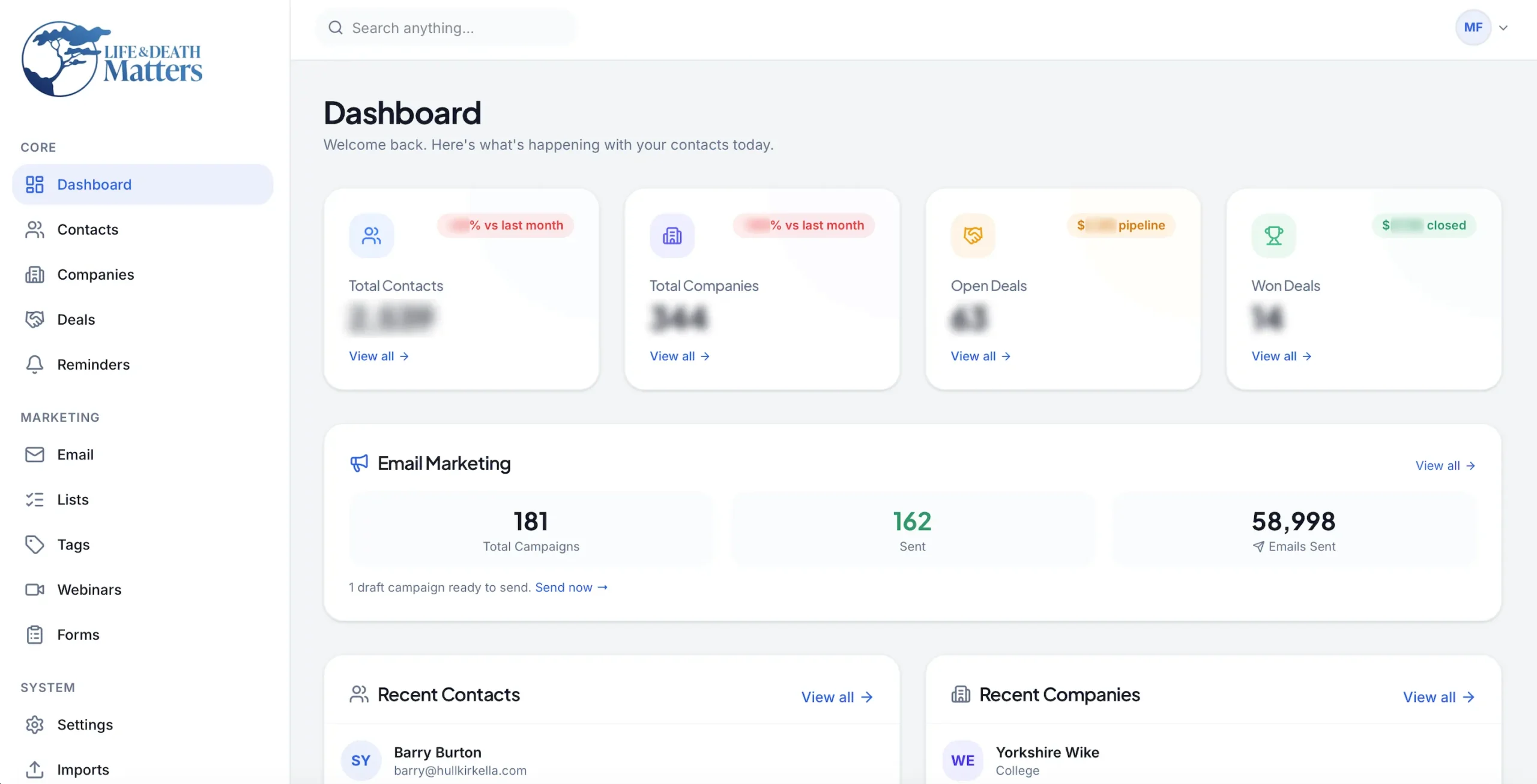
The project combined core CRM functionality, email communications, workflow management, and several custom processes into a single streamlined platform designed specifically around how their team operates.
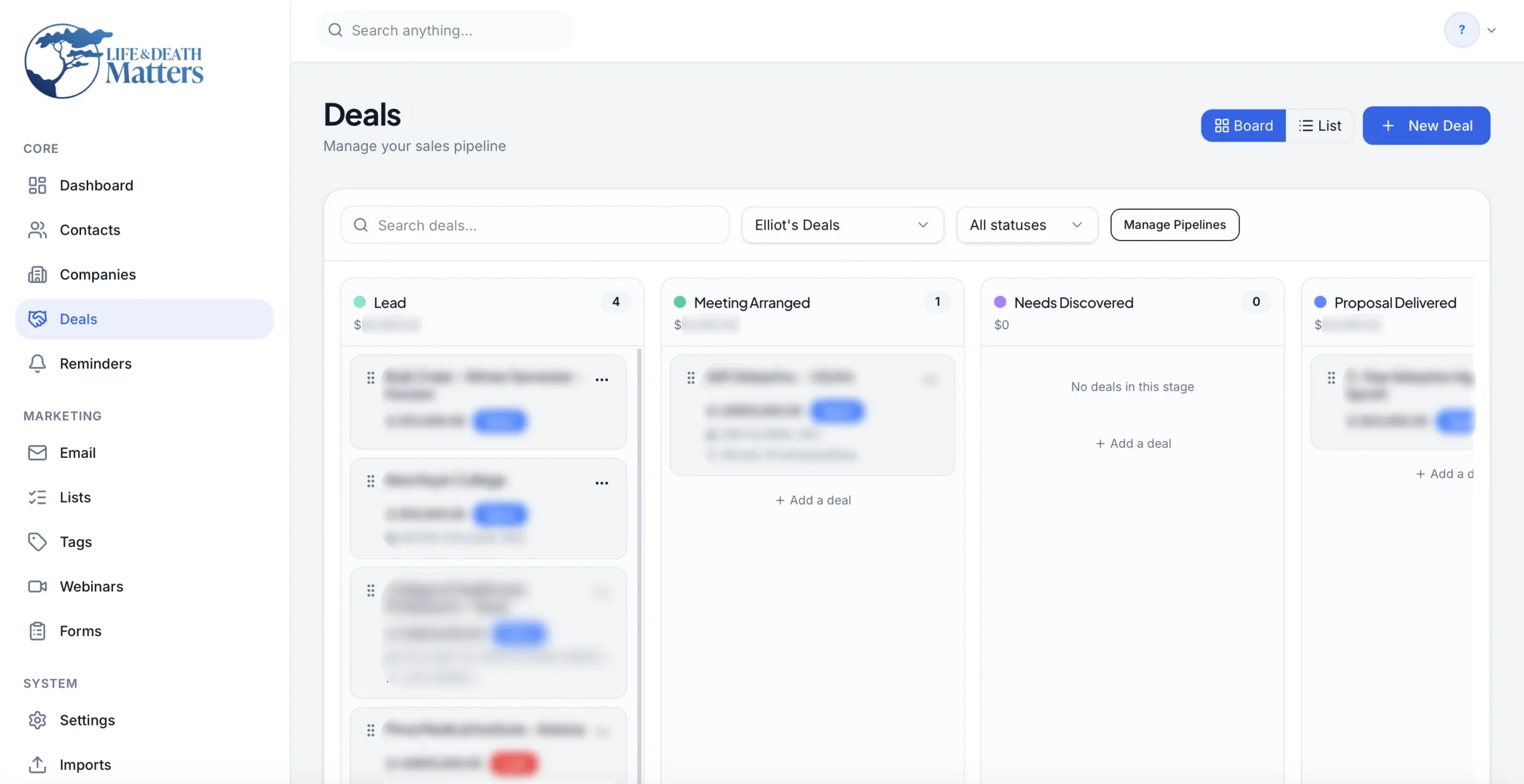
The result was a simpler, more focused system that reduced complexity, improved usability, and introduced functionality not available within their previous setup.
The project has been a success, and the platform is now maintained and supported at a fraction of the cost they were previously paying. It also continues to evolve through ongoing development and refinement as their requirements change.
We Took the Same Approach Ourselves
This isn’t something we’ve only done for clients.
Like many agencies, we were running a stack of different tools: Freshdesk for tickets, ClickUp for project management, Pipedrive for CRM, Campaign Monitor for email, plus various analytics and SEO platforms.
Each system served a purpose, but they didn’t always integrate cleanly. Customisation was ongoing, and the overall setup became increasingly complex.
So we applied the same thinking internally.
We built our own platform, combining only the functionality we actually needed … nothing more.
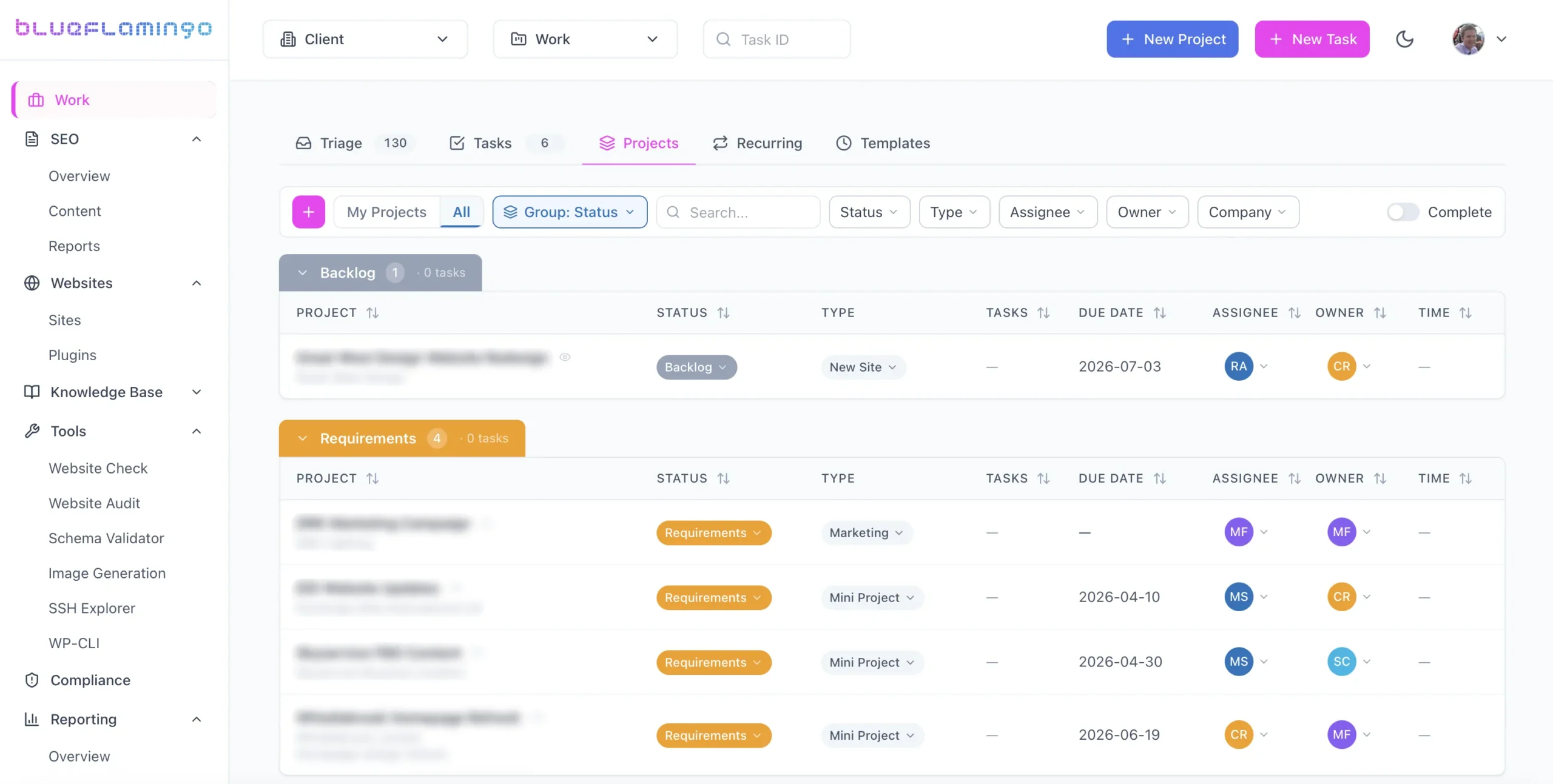
Since going live, we’ve been able to consolidate and replace the majority of these tools, simplifying our stack significantly. The result has been a more streamlined, efficient system tailored entirely to how we operate.
A More Balanced Way to Think About SaaS
This approach isn’t right for every business. Platforms like Salesforce and ActiveCampaign are powerful, scalable solutions that make sense in many scenarios.
But if you’re only using a fraction of what you’re paying for, or stitching together multiple tools that don’t quite fit, it’s worth asking a different question: